Hugging the Tree (Ôm Thụ / 抱树)
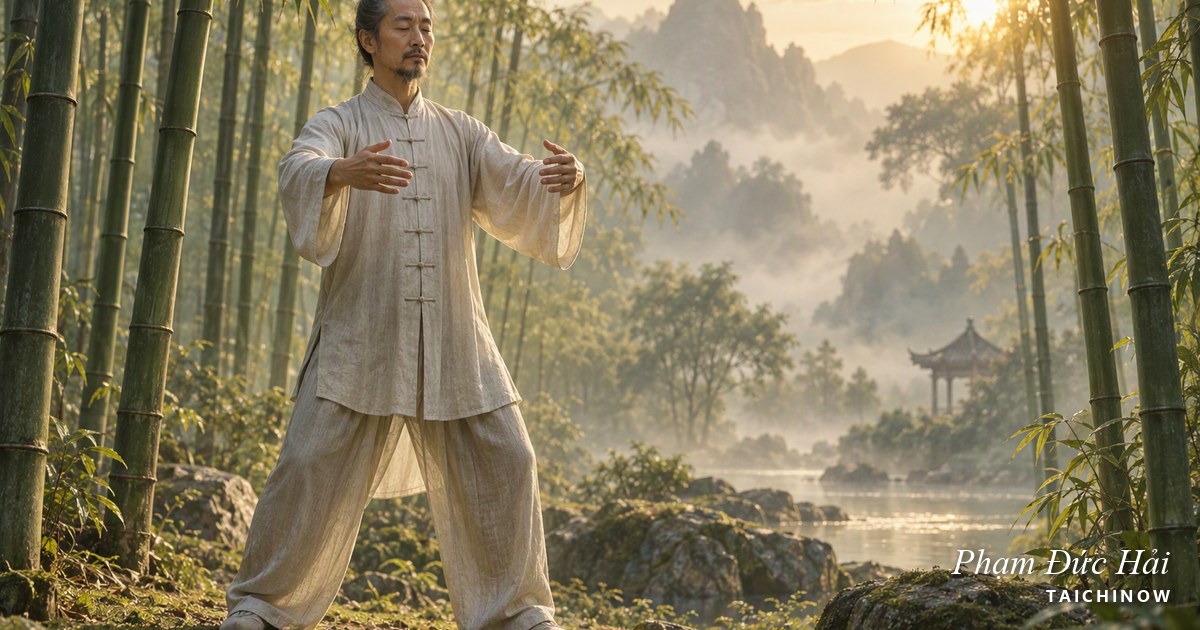
The Posture
Hugging the Tree (Ôm Thụ / 抱树) is the foundational Zhan Zhuang (Trụ Thế / standing meditation) posture. Stand with feet shoulder-width apart, knees slightly bent, arms held in front of the chest as if embracing a large tree — rounded, suspended, alive.
It looks like nothing is happening. Everything is happening. The body is learning to stand with structure, to breathe into the lower dantian, to release tension from the nine checkpoints of sōng, and to remain patient.
The 5-Minute Practice That Changes Everything
Five minutes a day of Ôm Thụ, done consistently, reshapes the body. The breath deepens by itself. The shoulders release. The kua opens. The standing form improves. The slow form improves. Push hands improves. Health improves.
Set a timer. Stand against a wall for the first week if balance is uncertain. The wall is a teacher, not a crutch.
What Standing Meditation Does
Zhan Zhuang (Trụ Thế) does three things at once. Biomechanically, it teaches the body to stand with the integrated skeleton, the dropped shoulders, the open kua, the grounded feet. Neurologically, it teaches the nervous system to hold a posture without gripping. Energetically, it teaches the breath to descend and the dantian to fill.
Most students experience the benefits in this order: first biomechanical (the body learns to stand), then neurological (the mind learns to be still in the body), then energetic (the breath learns to descend). Each stage takes longer than the one before. The biomechanical benefits appear in weeks; the neurological in months; the energetic in years.
Common Distortions and Their Meanings
After three to five minutes of standing, the body reports. The reports arrive as physical sensations that are not random — they are messages from the body about its current organisation:
- Shoulder ache: the trapezius is holding tension that the body does not need. Release it by dropping the elbows and letting the shoulders fall.
- Lower back ache: the lumbar spine is not suspended; the lower back is doing structural work that the dantian and the legs should do. Sink the tailbone slightly and let the spine lengthen.
- Knee discomfort: the kua is closed; the knee is being asked to absorb forces the hip should absorb. Open the kua by releasing the inner thighs and the hip rotators.
- Calf trembling: the calf is doing too much work; the weight is on the heels instead of the soles. Shift the weight slightly forward into the bubbling-well point.
- Foot numbness: circulation is restricted; the body is gripping the floor. Release the toes; let the foot spread naturally on the ground.
Each report is a diagnostic. The student who listens to the reports and corrects them in real time is doing internal medicine through posture.
Master Cue
"Stand. Breathe. Wait. The body learns."